Opening for religious services: 6.00 pm (Monday–Saturday) – 8.00 am, 10.30 am and 6.00 pm (Sundays and holy days)
After the almost total destruction of Francavilla during the Second World War, it was decided to provide the town with a new large church in the Civitella district, where the church originally dedicated to the Brazilian pilgrim San Franco da Catanzaro once stood.
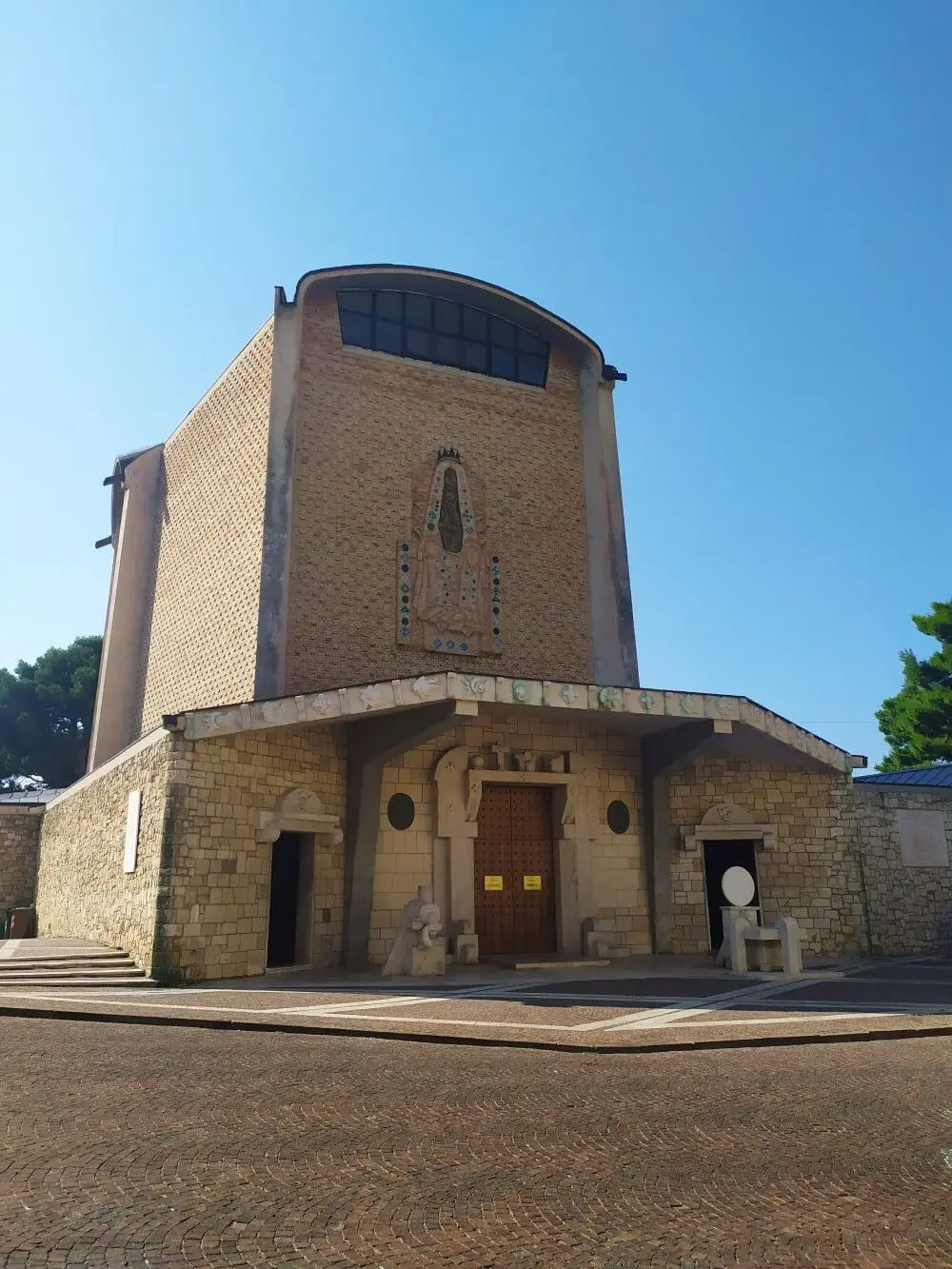
The new building was designed by the internationally renowned architect Ludovico Quaroni in the years immediately preceding the Second Vatican Council (1962–1965).
Architect Quaroni, a lecturer at the Faculty of Architecture in Rome, created a masterpiece of post-war Italian rationalism in the setting of the new Francavilla: a work “capable of standing up to the Mediterranean light, an architecture not dependent on the preciousness of glass, perfect plasterwork or clean paintwork”.
What is most striking about the exterior are the materials used in its construction: the exposed brick of the vast walls, the white stone of the base, and the bare reinforced concrete of the corner pillars. The imposing size of the building is particularly evocative: it has an octagonal perimeter with sides of different lengths and stands on the edge of the hill, making it visible from a great distance.
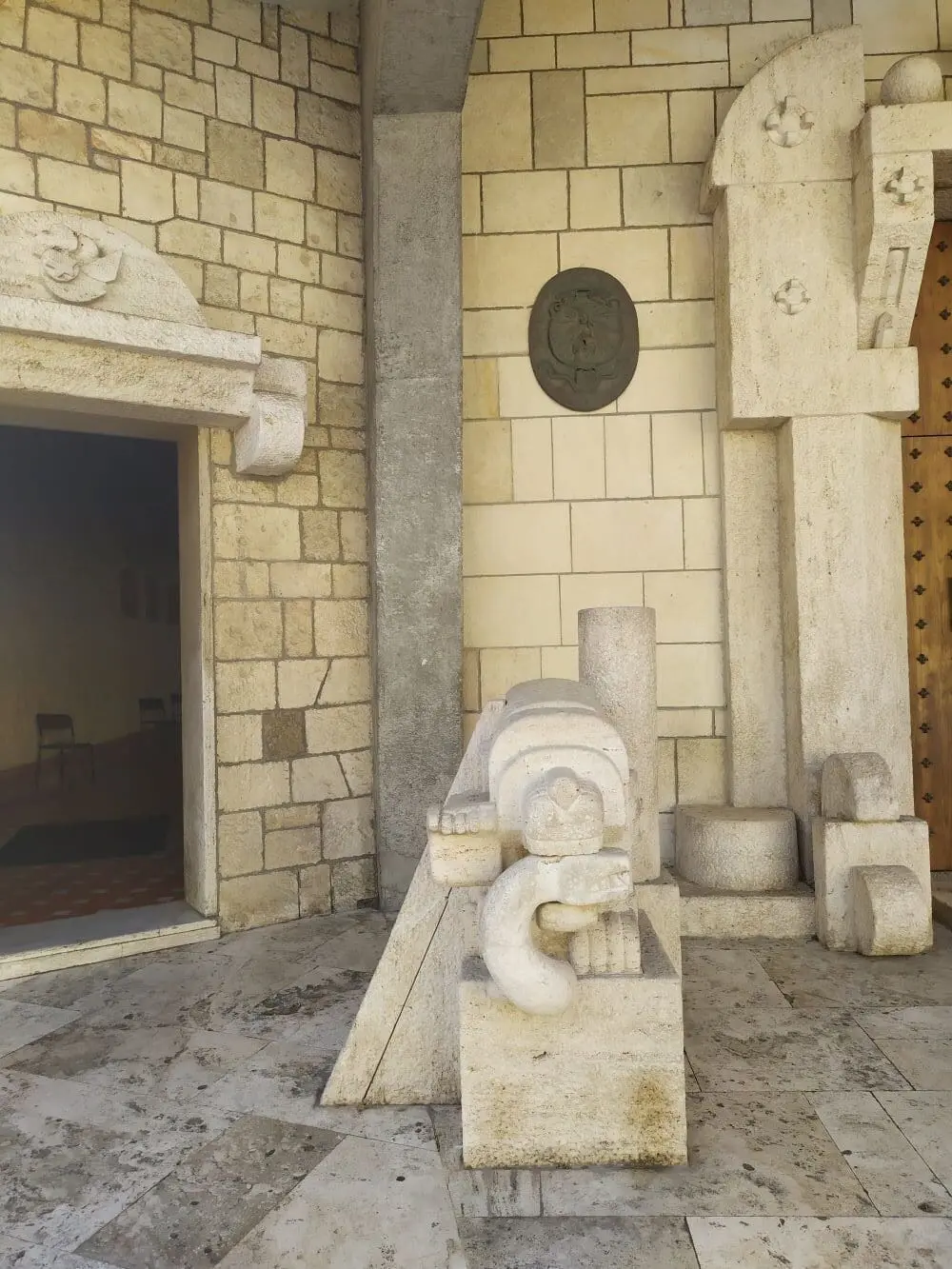
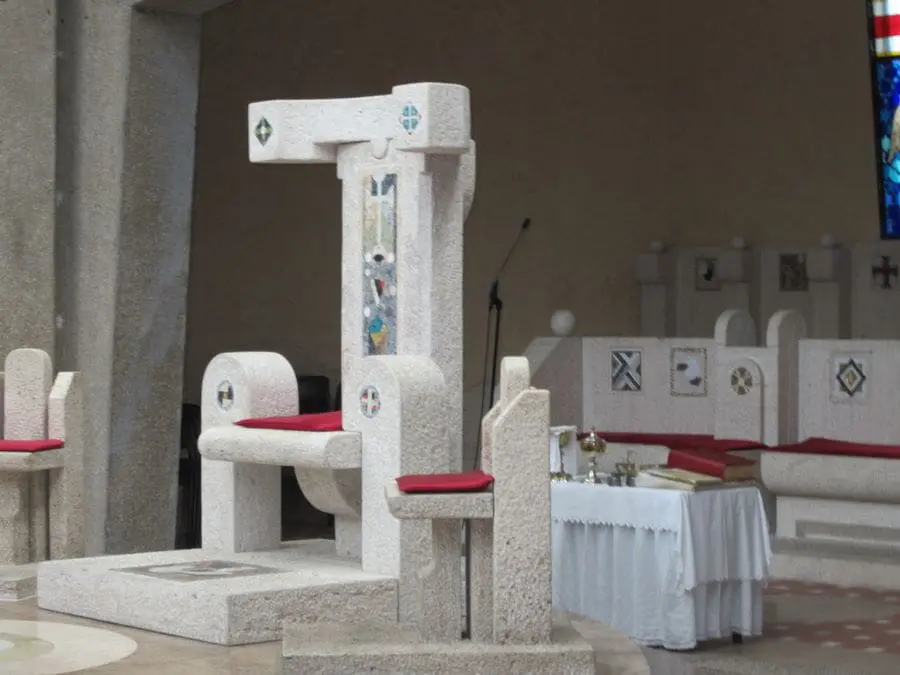
The fountain, also octagonal and made of white travertine, and the decoration on the façade featuring a lion holding a serpent in its mouth, symbolising the struggle between good and evil, are all works by the sculptor Pietro Cascella. By the same artist, in the spacious and solemn interior, are the high altar, pulpit, Easter candle, tabernacle, presbyterial seats, stone Stations of the Cross and the statue of S. Franco, all made in stone, as well as the monument commemorating the destruction and rebirth of the town, placed on the rear wall. The terracotta frieze in the ambulatory and the window decorations are by Andrea and Pietro Cascella.
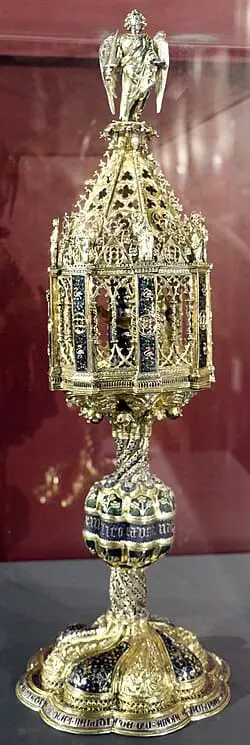
The church also houses a precious Gothic-style monstrance dating from 1413 by Nicola da Guardiagrele, as well as other items of sacred silverware.