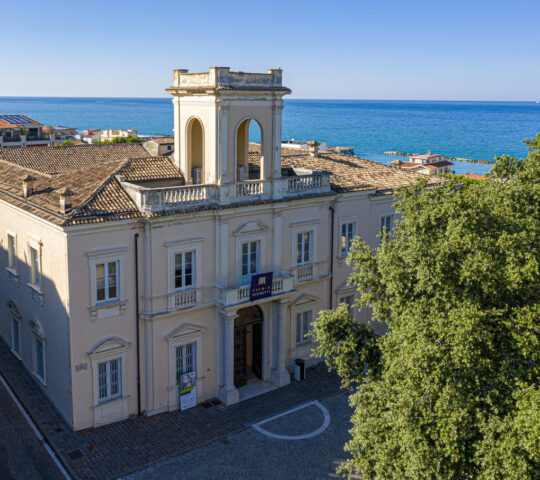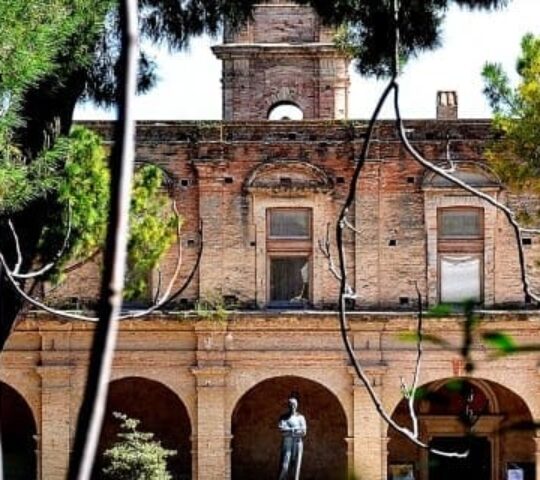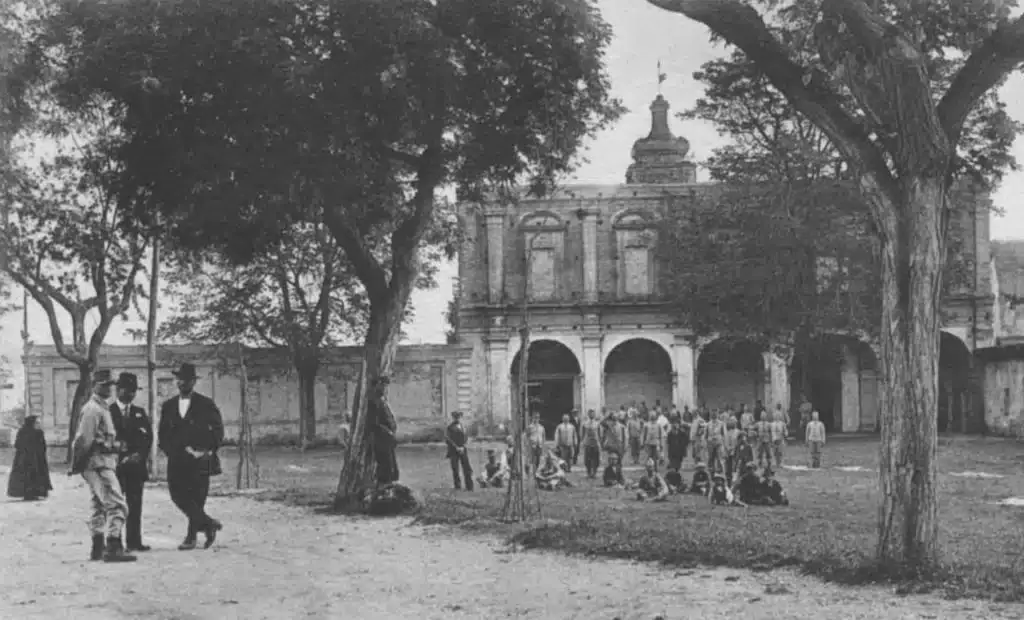
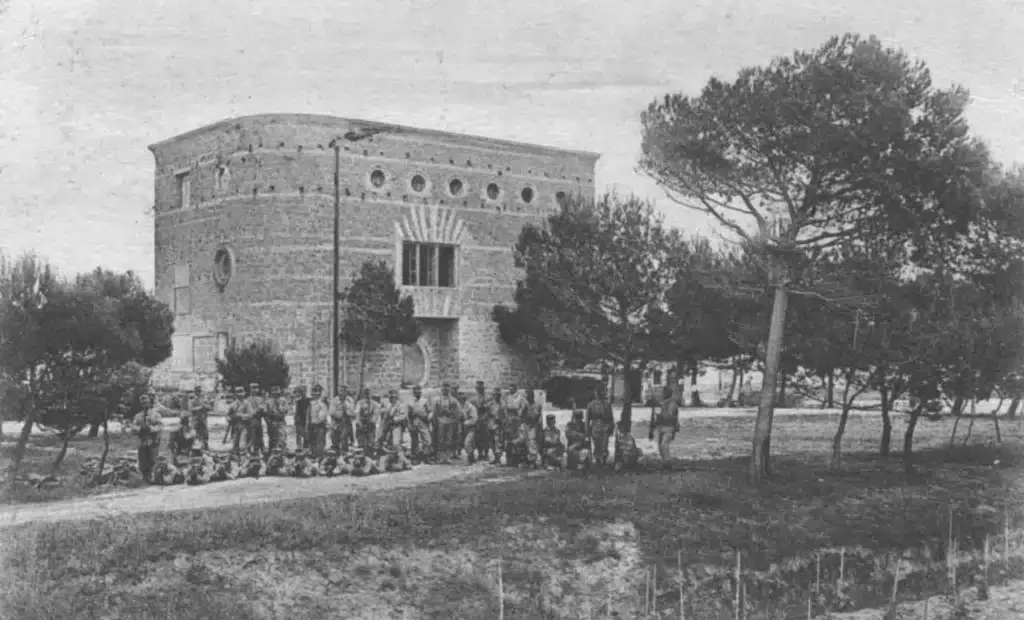
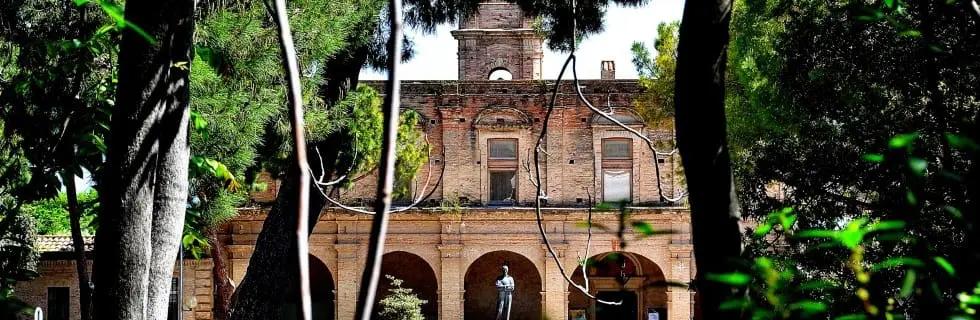
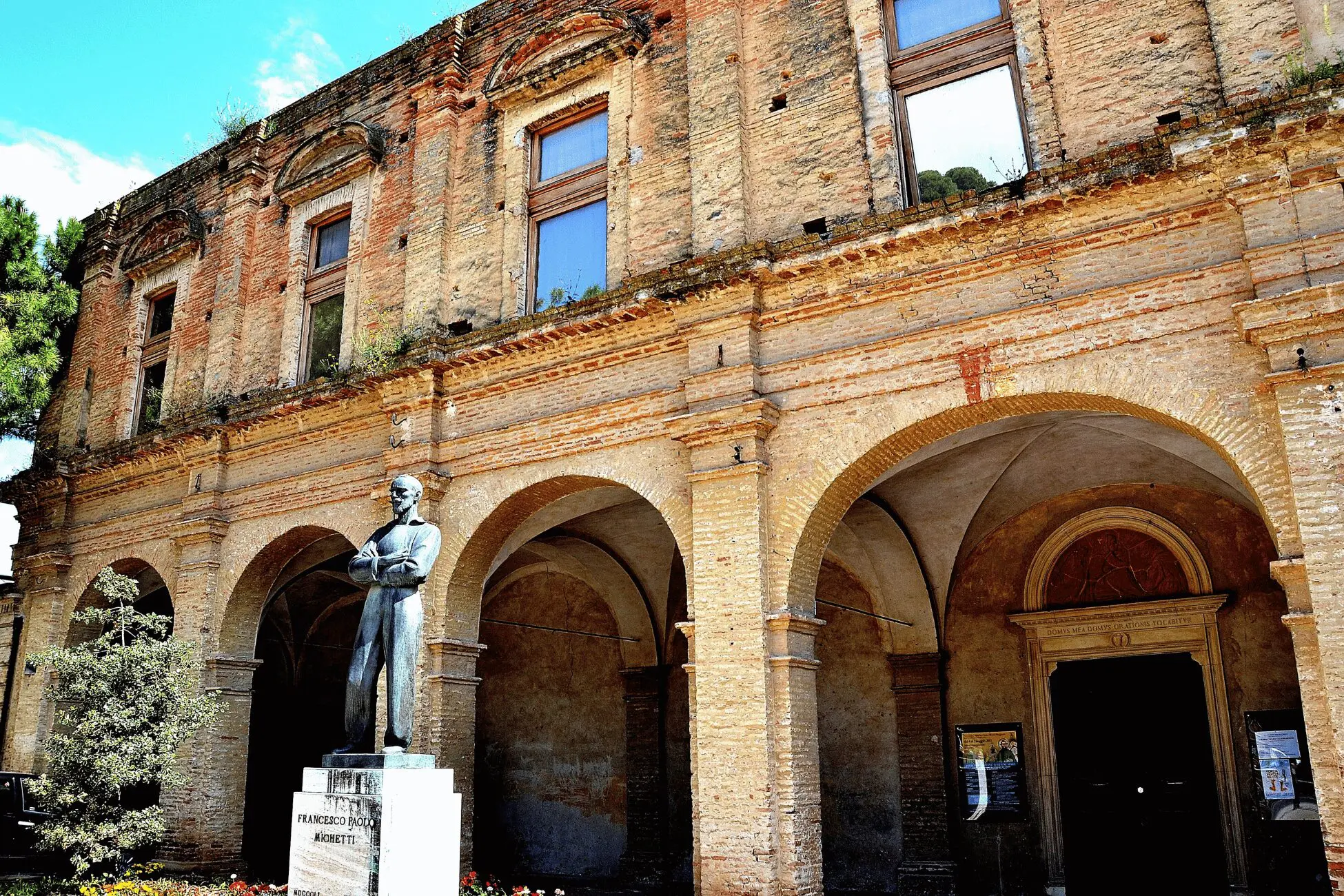
During the 1880s, in the former Franciscan convent of Santa Maria del Gesù in Francavilla al Mare, poets, painters, musicians and intellectuals shared an experience that remains unique in the history of modern Italian art: the creation of an artistic circle where they could exchange ideas, experiences and techniques related to their respective crafts, seeking a fusion of different forms of artistic expression. The paintings, sculptures, verses, music and photographs produced by artists in search of “Beauty and the New” bear witness to an unprecedented spiritual harmony.
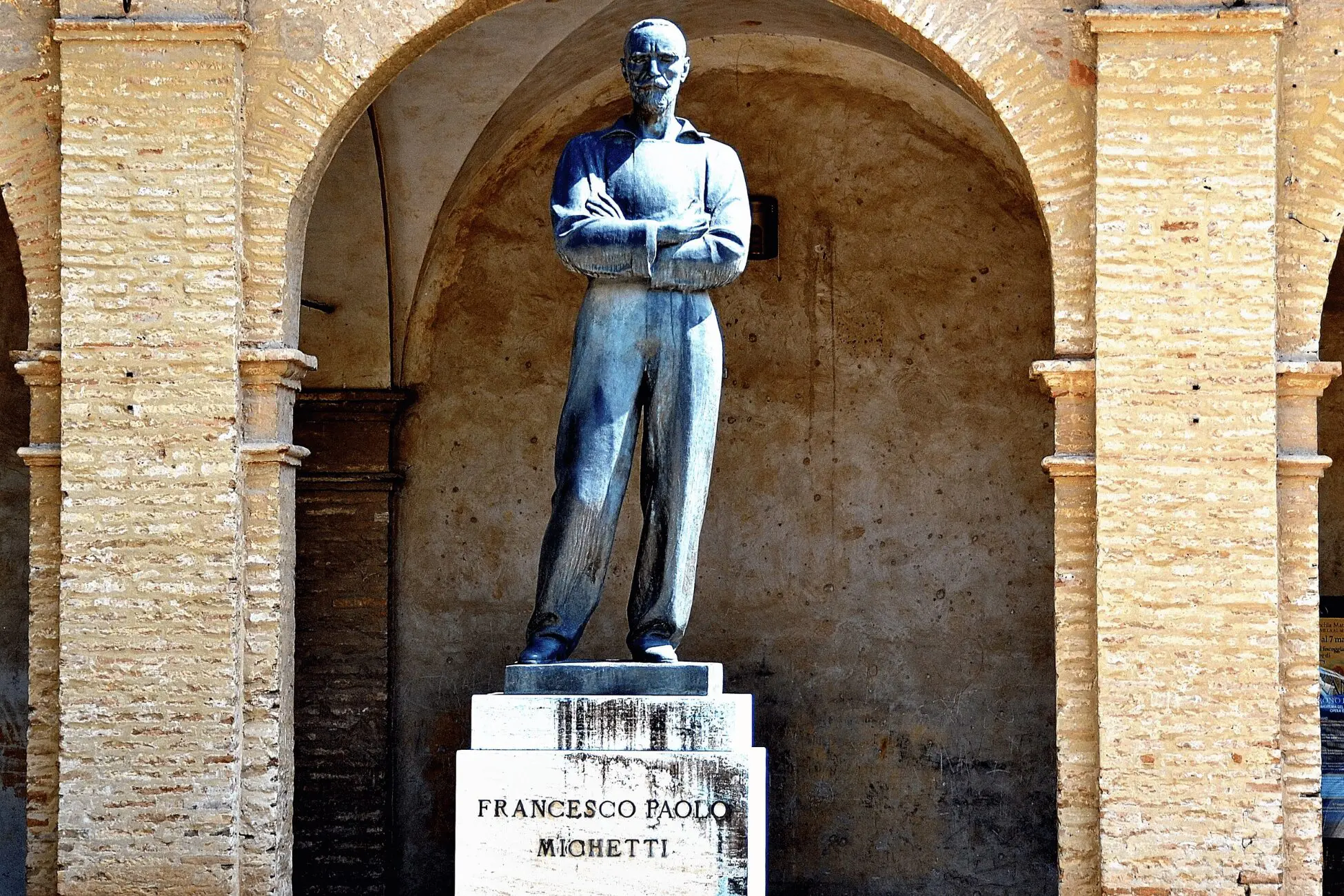
The creation of a meeting place for cultural figures within the walls of the Franciscan convent was partly due to the foresight of the mayor of Francavilla at the time. He arranged for Michetti—already a well-known artist and the owner of a studio on the Francavilla seafront—to be granted a prestigious place where he could work in peace and, if possible, establish a school or another industrial or craft-based activity. Although the school was never founded, a far more important goal was achieved: the Abruzzo town gained national recognition thanks to the many prominent personalities who began visiting Michetti’s home, making Francavilla known throughout Italy and beyond.
The friendship between Francesco Paolo Michetti and the very young Gabriele D’Annunzio was crucial to the birth of the “Circle” in Francavilla al Mare. D’Annunzio had already attracted attention in 1879 with his first collection of poems, Primo vere. From then on, and for approximately fifteen years, he was a regular guest at the convent—or the “Conventino,” as the poet often called it—where he wrote The Child of Pleasure (1889), as well as much of The Intruder (1891) and The Triumph of Death (1894).
The writer’s move first to Naples in 1891 and then to Rome in 1893 did not prevent him from continuing to visit the Conventino regularly, either alone or accompanied by his current lover. D’Annunzio’s final stay in Francavilla, in 1897, did not weaken his artistic partnership with Michetti. Their collaboration began in 1881–1882 with Canto novo, a poetry collection illustrated by the artist from Tocco da Casauria, and continued until 1903–1904, when Michetti designed the sets and costumes for a series of performances of D’Annunzio’s play The Daughter of Iorio.
Francesco Paolo Tosti had also met Michetti during the second half of the nineteenth century and visited the convent during the same period as D’Annunzio. He developed a warm relationship with both the writer and Michetti, which continued until the musician’s death in 1916.
Edoardo Scarfoglio and Matilde Serao were also frequent guests of Michetti at the convent. Serao, in particular, was deeply impressed by the community of artists and intellectuals that gathered there, describing it as “the youngest, strongest and most intellectual centre in Italy.”
The convent was also regularly visited by several renowned artists from Abruzzo, including Costantino Barbella and Basilio Cascella, founder of the celebrated family of painters and sculptors. Both benefited from the support and collaboration of D’Annunzio, Michetti and the other members of the Francavilla artistic circle.