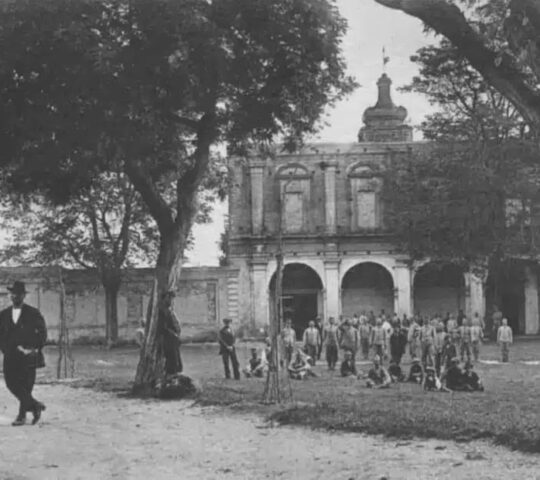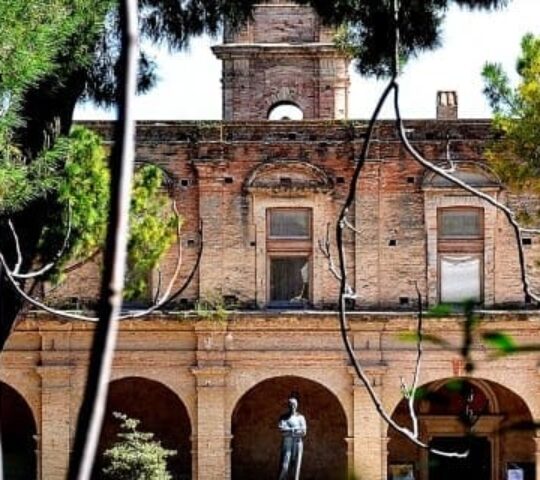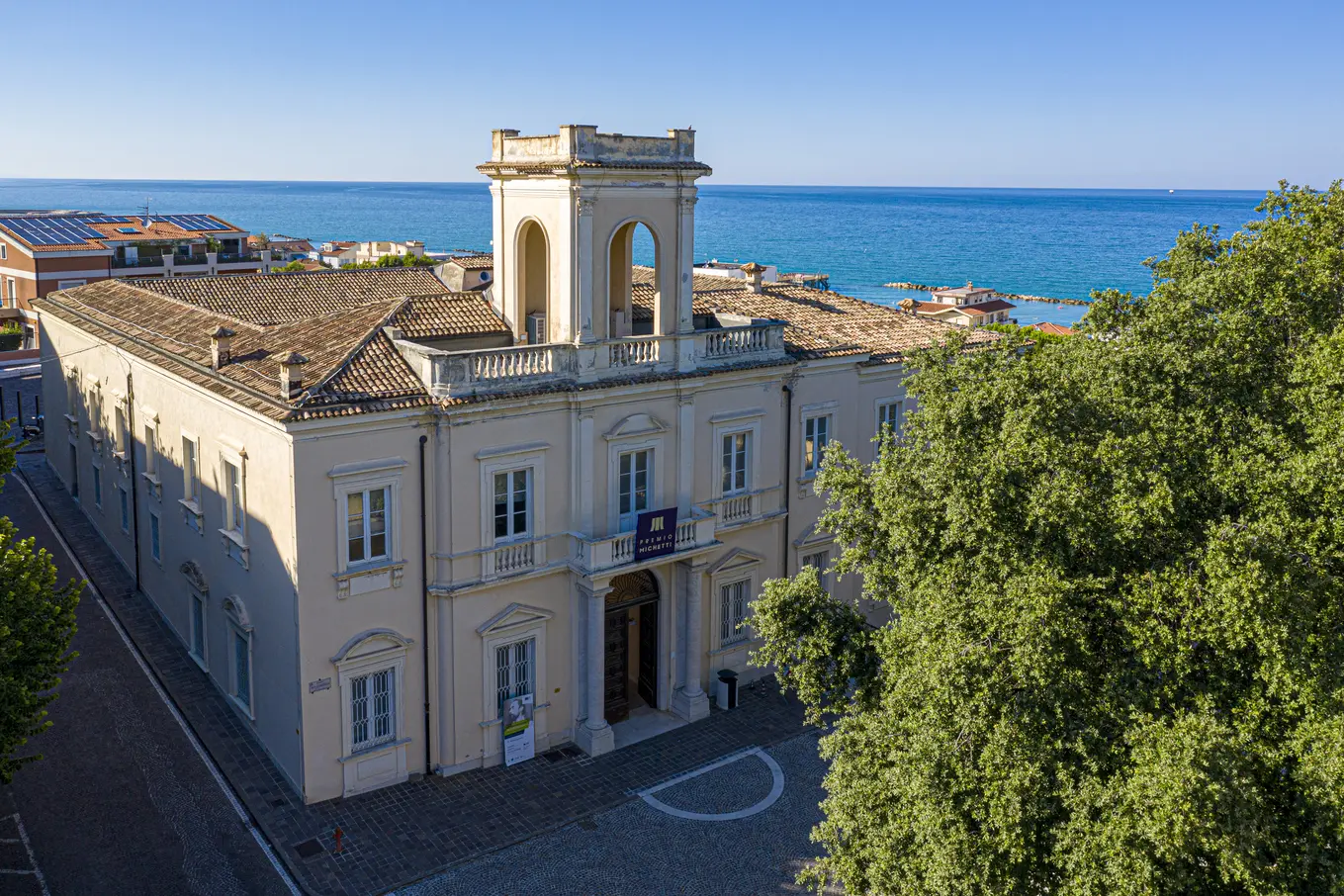
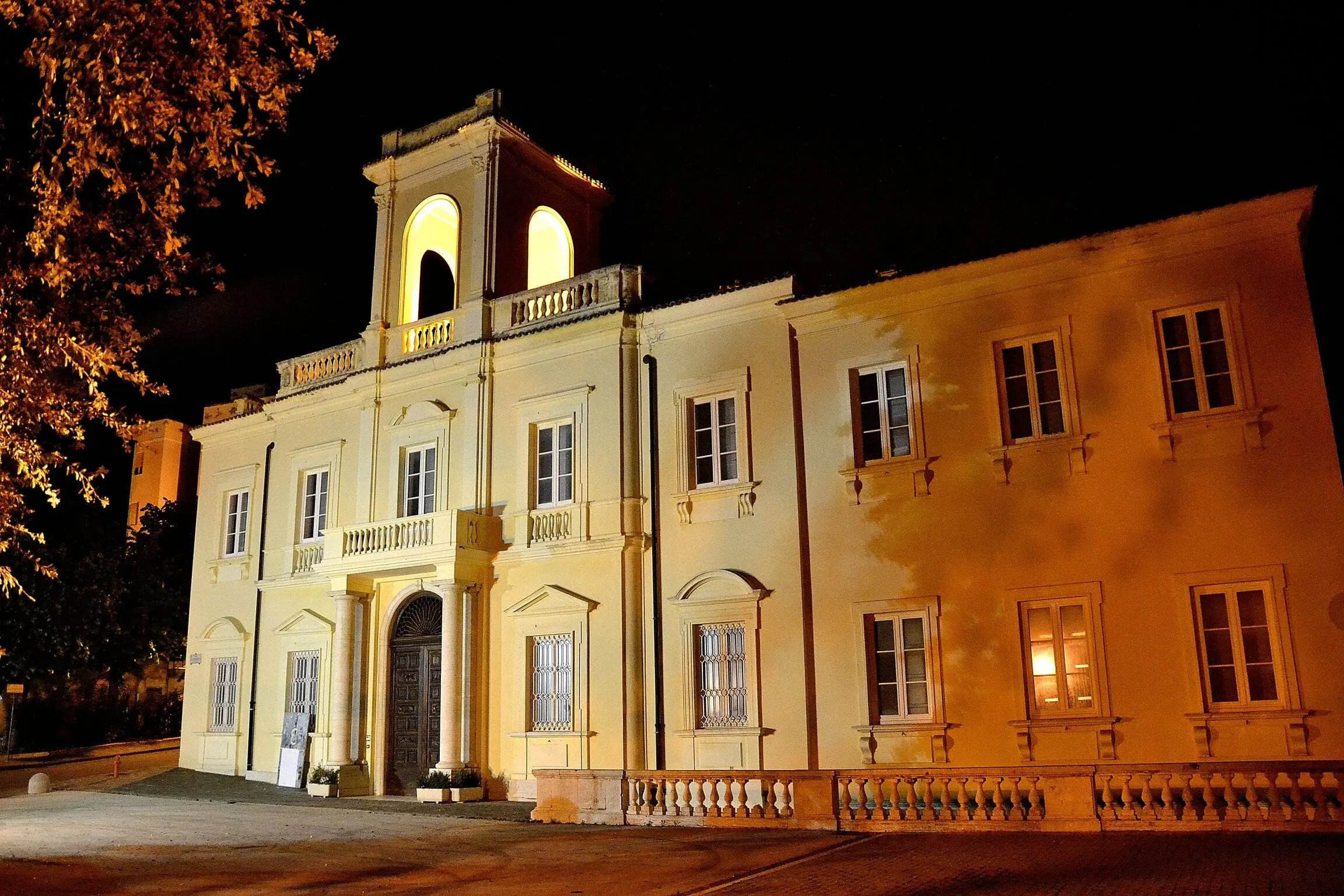
Museo Michetti, abbreviated as “MuMi”, is dedicated to the painter Francesco Paolo Michetti and was inaugurated in 1997 in the rooms of the historic Palazzo San Domenico, the former town hall.
The building, an ancient Dominican convent dedicated to Santa Maria delle Grazie, was almost entirely destroyed during the war. It was later rebuilt in post-classical style and used as the town hall. Only in the 1990s, after a new, modern municipal headquarters had been built in the upper part of Francavilla, Palazzo San Domenico was used to host various exhibitions, until it was converted into a museum in 1997.
Every year, the museum hosts the prestigious Premio Michetti, the longest-running art prize in Italy after the Venice Biennale. Established in 1947, it has been won over the years by some of the most important artists of the 20th century. Today, the annual competition is curated by the Foundation of the same name, established in 2005 with the aim of honouring and perpetuating the memory of Francesco Paolo Michetti through art.
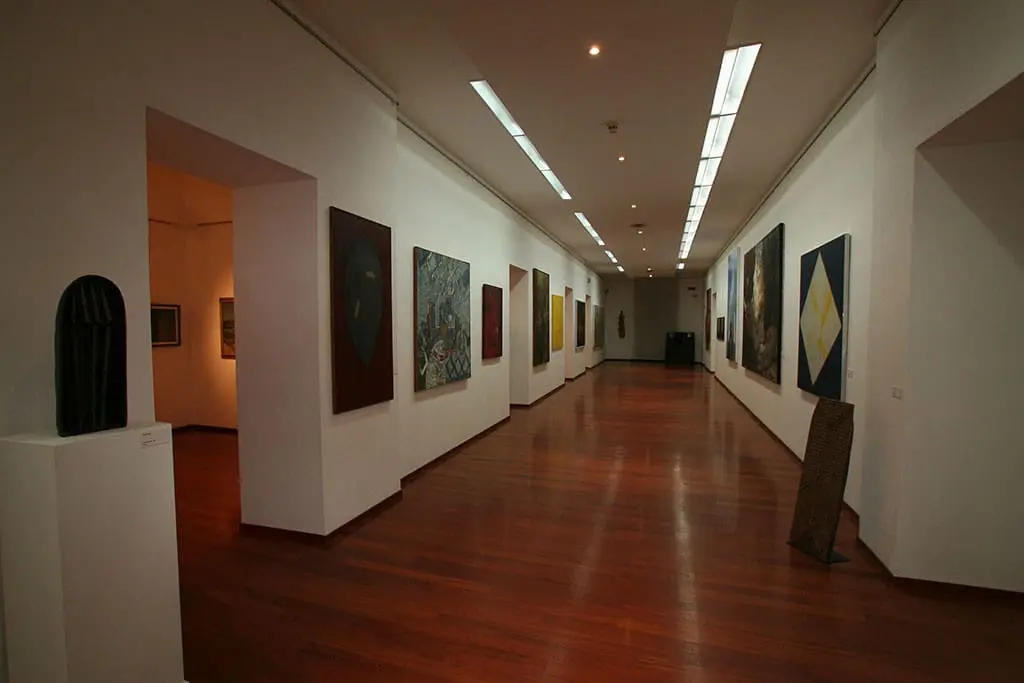
Each year, an art exhibition is organised in the summer, with the opening taking place in July. The exhibition is entrusted to different curators, and a jury selects and awards prizes to a number of works, all of which are acquired by the Foundation as a record of the institution’s journey since 1947. These works are displayed in the Museum of Modern and Contemporary Art, located on the first floor of Palazzo San Domenico.
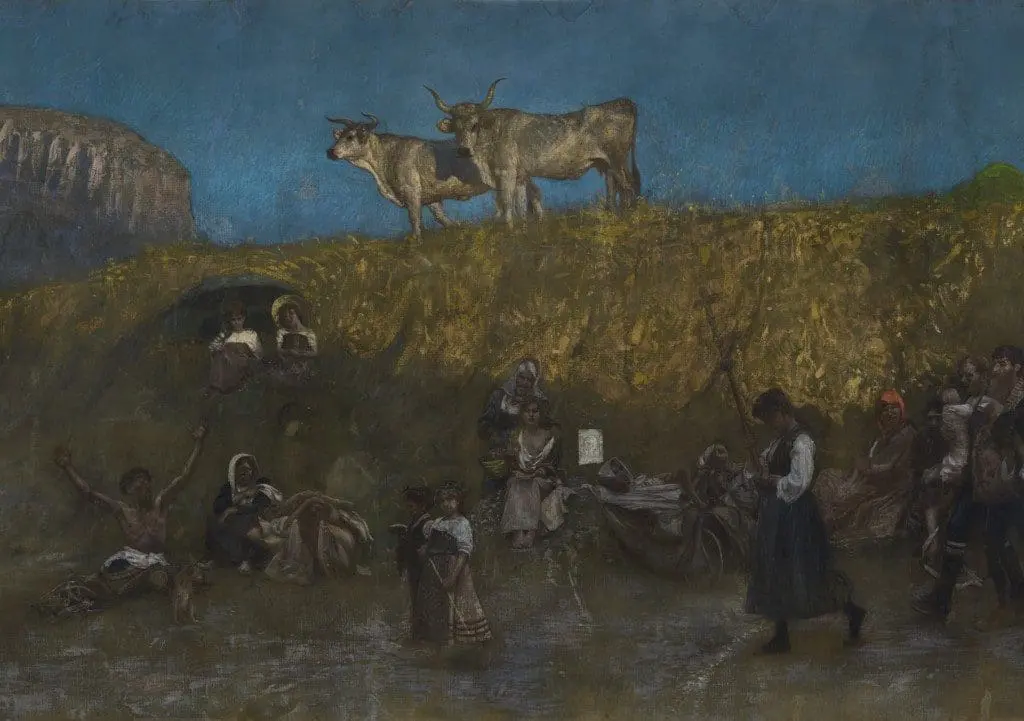
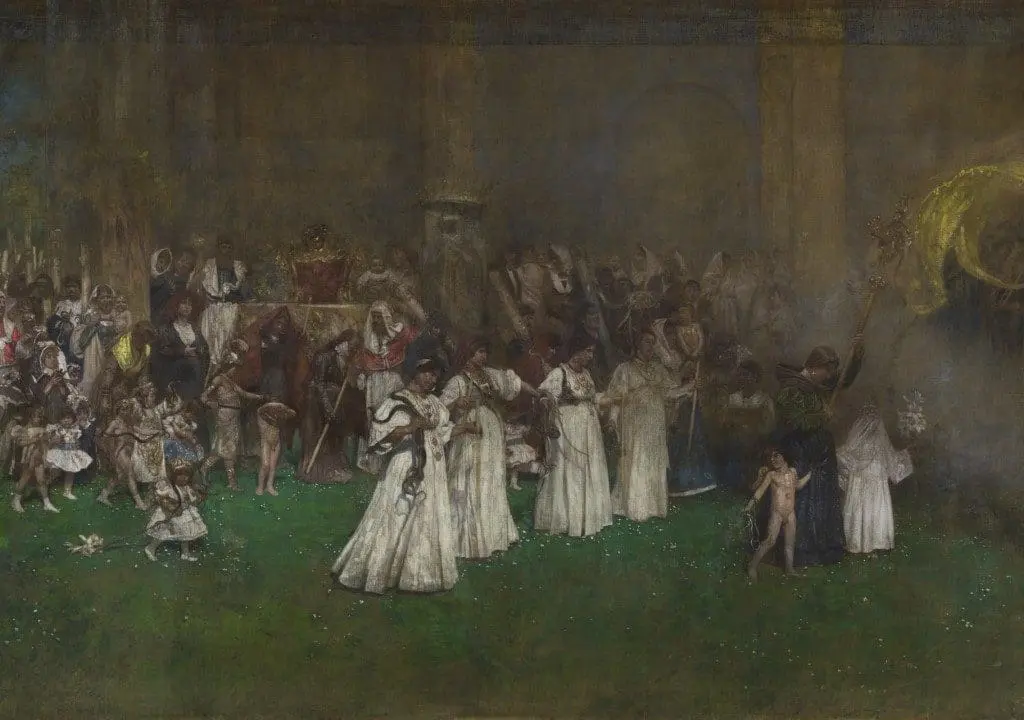
The lower-floor hall, on the other hand, houses two large original canvases by Francesco Paolo Michetti, displayed opposite one another: “Gli Storpi” and “La Processione delle Serpi”, both presented at the Paris Universal Exhibition of 1900 and deserving of special mention.
“Gli Storpi” depicts a group of pilgrims heading towards the sanctuary as they pass in front of a group of beggars, who show their infirmities in order to appeal for alms. On the slope, two young girls look on with curiosity, while higher up a pair of oxen symbolise nature’s indifference to human suffering.
On the opposite wall, “La Processione delle Serpi” portrays the traditional ritual of Cocullo, a small village in the Abruzzo mountains where, every 1 May, the statue of San Domenico is carried in procession wrapped in snakes, symbolising the cycle of the seasons and renewal. The entire sacred procession, full of colours and moving figures, has the appearance of a snake winding and writhing its way forward. The work, realistic and monumental in style, was inspired by a visit the Abruzzo artist made to the ritual, documented in numerous photographs.